
Cannabis Curing Humidity: The Range That Protects Your Harvest
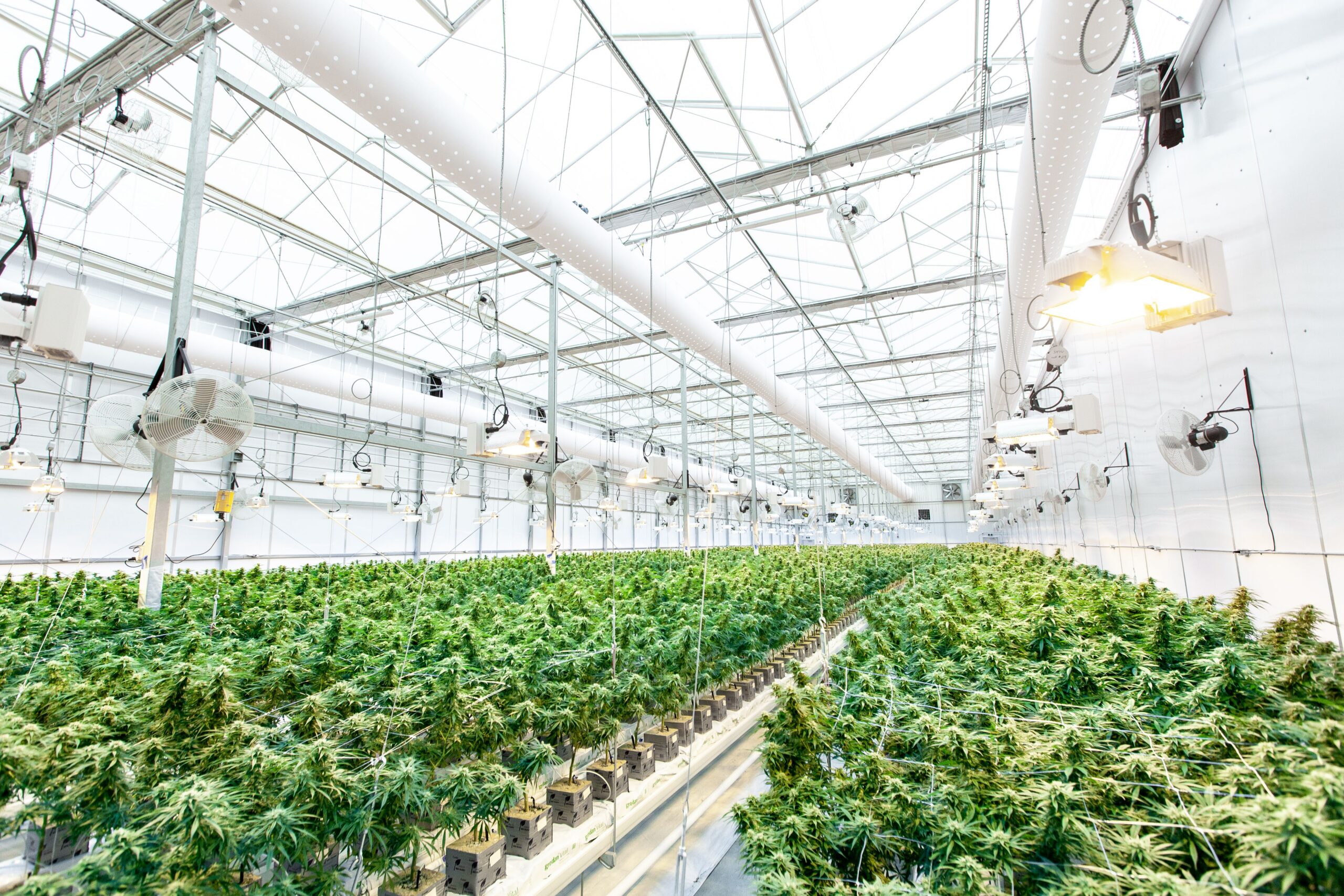
Cannabis curing humidity should sit between 58 and 62 percent relative humidity. That is the short answer, and for a licensed European producer it is also the start of a more demanding problem than most growing guides admit. At jar scale, a humidity pack holds that range for you. At facility scale, across hundreds of kilograms of drying and curing biomass, holding 58 to 62 percent RH is an engineering task. The difference between hitting it and missing it shows up in trichome retention, terpene content, and whether a batch passes the microbial testing that EU-GMP and the European Pharmacopoeia require.
For a producer in Poland, Greece, North Macedonia, or one supplying the German medical market, that last point is not a quality preference. It is the line between a saleable, exportable batch and one that fails release. This guide covers the target range by stage, the science behind why the window is so narrow, how long to dry cannabis before curing begins, and the part almost no ranking article addresses: how to hold curing humidity across an entire room rather than inside a sealed jar.
The Short Answer: Target Cannabis Curing Humidity by Stage
Curing is one stage in a sequence, and each stage has its own humidity target. Getting the cure right depends on getting the dry right first.
The curing window is tight on purpose. Below roughly 55 percent RH the flower dries out, terpenes volatilise, and the material loses sensory quality. Above 65 percent RH you invite mould, Aspergillus, and the anaerobic conditions that produce an ammonia smell in sealed containers. For European medical producers this is measured, not estimated: cannabis flower released as a herbal medicinal product must meet European Pharmacopoeia microbial limits, including total yeast and mould count and the absence of Aspergillus, and is commonly held to a water activity of 0.55 to 0.65 aw, which sits in equilibrium with roughly 58 to 62 percent RH. The number your Qualified Person and your testing lab care about is microbial load and water activity. Relative humidity control is how you reach it.
Why Curing Humidity Decides Trichome and Terpene Quality
Curing is not simply drying more slowly. It is a controlled process in which residual moisture inside the flower migrates outward at a rate slow enough for enzymatic activity to break down the chlorophyll, sugars, and starches that otherwise make cannabis harsh. Relative humidity is the lever that controls that migration rate.
Terpene retention. Most of the aromatic character of cannabis comes from monoterpenes, which are highly volatile. They evaporate readily under heat, low humidity, and moving air. When curing RH drops too low, moisture leaves the flower quickly and carries terpenes with it before they have stabilised. The result is a batch that tests lower on total terpenes and reads as flat to a pharmacist or a patient. Hold the flower at 58 to 62 percent RH and moisture leaves gradually, giving the terpene profile time to set.
Trichome integrity. Trichome heads are fragile. When flower is over-dried, the stalks and heads become brittle and shatter during handling, trimming, or transport. That is lost cannabinoid and terpene content, and it shows as a duller, less resinous final product. Curing humidity that stays in range keeps trichomes pliable rather than glassy.
The failure modes at each edge:
- Too low (below 55% RH): rapid moisture loss, terpene flash-off, brittle trichomes, and reduced weight at release.
- Too high (above 65% RH): surface moisture that supports mould and Aspergillus, anaerobic bacterial activity that produces an ammonia odour, and a failed microbial or water activity result that can force reprocessing or destruction of the batch.
At commercial volume, neither edge is a minor quality note. One is lost potency and market value. The other is a failed release under EU-GMP.
How Long to Dry Cannabis Before You Start the Cure
The most reliable answer to how long to dry cannabis is 7 to 14 days, but duration is a symptom, not the target. What you are actually chasing is a moisture endpoint. A common rule of thumb is to hold the drying room near 16°C and 60 percent RH so the flower loses moisture slowly and evenly. Under those conditions, most cultivars reach the right endpoint in roughly ten to fourteen days.
You know drying is complete when the smaller stems snap rather than bend, and, if you measure it, when water activity falls to about 0.55 to 0.62 aw. Rush the dry with low humidity or excess heat and you lock chlorophyll into the flower, producing a hay-like character that a long cure struggles to correct. Drag the dry out at high humidity and mould sets in before curing ever begins. Drying, in other words, sets the ceiling for how good the cure can be. A well-controlled drying room is not a separate concern from curing humidity. It is the first half of the same continuous RH control problem.
Where Commercial Curing Breaks Down: The Room, Not the Jar
Almost every top-ranking article on cannabis curing humidity is written for a home grower with a few sealed jars, a hygrometer, and a pack of humidity beads. That advice is correct at that scale and useless at commercial scale. Humidity packs do not manage a 200 square metre drying room holding a full harvest of transpiring biomass.
At room scale the physics work against you in two directions:
- Early in the dry, RH spikes. Freshly cut biomass releases a large volume of water through transpiration. In an enclosed room, RH climbs quickly and stays high, which is exactly the mould window you are trying to avoid.
- Later in the dry, RH crashes. As the biomass gives up its moisture and the air handling keeps pulling, the room overshoots dry. Dehumidification and cooling alone have no way to put moisture back. There is no floor under the RH, so it drifts well below 55 percent and the terpene and trichome damage described above begins.
Add the reality that a licensed facility runs propagation, vegetation, flower, drying, and curing spaces at the same time, each with a different RH target, and it becomes clear why room-level humidity is an equipment problem rather than a jar problem. This is the gap between hobbyist guidance and regulated European practice, and it is where product quality and batch compliance are actually won or lost.
Holding 58 to 62 Percent RH Across a Whole Cure Room
Controlling curing humidity at facility scale means being able to add moisture precisely, not only remove it. Dehumidification handles the high side. Precision humidification handles the low side and, more importantly, holds a stable setpoint rather than letting the room swing between the two.
This is what industrial ultrasonic humidifiers are built for. Ultrasonic humidification converts water into a fine 1µm mist using high-frequency vibration rather than steam, which means it adds moisture without adding significant heat to a temperature-sensitive curing room. CleanSPOT systems hold RH to within ±1 to 2 percent, maintained continuously, which is the tolerance that keeps a room inside the 58 to 62 percent band rather than merely averaging it.
Three details matter specifically for a regulated medicinal product:
- Hygiene of the humidification itself. A humidifier feeding moisture into a room of curing flower cannot become a source of microbial contamination. CleanSPOT units run on RO water and include a built-in UVC LED that disinfects the unit’s own water supply continuously, which protects the water activity and Aspergillus results you will be tested against.
- Material specification. Stainless steel SS 304/316L construction meets the cleanliness expectations of a GMP facility rather than a consumer-grade plastic unit.
- Multi-room coordination and documentation. Master and slave control lets you run separate RH targets for drying, curing, veg, and flower rooms from a single point, with WiFi or full BMS integration so every setpoint is logged. Under EU-GMP that log is not a convenience. It is the batch record that demonstrates a lot was held in specification throughout drying and curing.
For facilities managing humidity through their air handling, duct and AHU humidifiers deliver the same precision at 35 to 280 L/h across a larger footprint. CleanSPOT provides this as direct EU-wide engineering support rather than distributor-relayed advice, and has delivered it for licensed European cultivators including Hempfarm Poland and Cannabis Medica Poland. That work is outlined in our cannabis cultivation case studies.
Cannabis Curing Humidity FAQ
Is 60 percent humidity too high for drying cannabis?
No. Sixty percent RH is at the top of the acceptable drying range and is a common target alongside a room temperature near 16°C. The risk is not 60 percent itself but drift above it, which is why active control matters at room scale.
Is 70 percent humidity too high for drying cannabis?
Yes. Sustained RH at or above 70 percent during drying creates a serious mould and Aspergillus risk and threatens your European Pharmacopoeia microbial result. If a drying room is sitting at 70 percent, transpiration is outpacing the room’s ability to manage moisture, and the setup needs dehumidification paired with controlled humidification to stabilise.
Is 65 percent too high for curing?
It is the upper limit. Curing above 65 percent RH risks condensation inside containers, anaerobic bacterial activity, and the ammonia smell that signals a batch is turning. Target 58 to 62 percent and treat 65 percent as the line you do not cross.
How long does curing take?
A minimum of two to three weeks produces a noticeable improvement, and many producers cure for four to eight weeks. The longer the flower is held correctly in the 58 to 62 percent range, the more the harsh compounds break down and the more the terpene profile stabilises.
Drying and Curing Targets at a Glance
| Stage | Target RH | Target Temperature | Typical Duration |
|---|---|---|---|
| Drying | ~60% RH | ~16°C | 7–14 days |
| Curing | 58–62% RH | Consistent room temperature | 2–3 weeks minimum, 4–8 weeks typical |
Curing RH should not exceed 65% at any point, and drying RH should not stay at or above 70% for extended periods, both risk mould and Aspergillus contamination.
The Takeaway
Cannabis curing humidity is not a difficult number to name. It is 58 to 62 percent RH. It is a difficult number to hold, and for a European producer working under GACP and EU-GMP that difficulty is exactly what separates a facility that consistently releases compliant, exportable flower from one that loses product to a room it cannot control. If you are building or upgrading a drying and curing room and want humidity that stays in range without manual intervention, talk to a CleanSPOT engineer about a system sized to your facility.
Tell us your room size and target RH, we’ll recommend the right system.
Request a quote